
Premier League
Football Regulator David Kogan Vows to Quit if Politics Interferes in Manchester City Case.
Independent Football Regulator chairman David Kogan has warned that he will resign if political pressure influences any action taken over Manchester City, insisting that the watchdog’s independence must remain absolute as the club appeals against a landmark financial ruling.
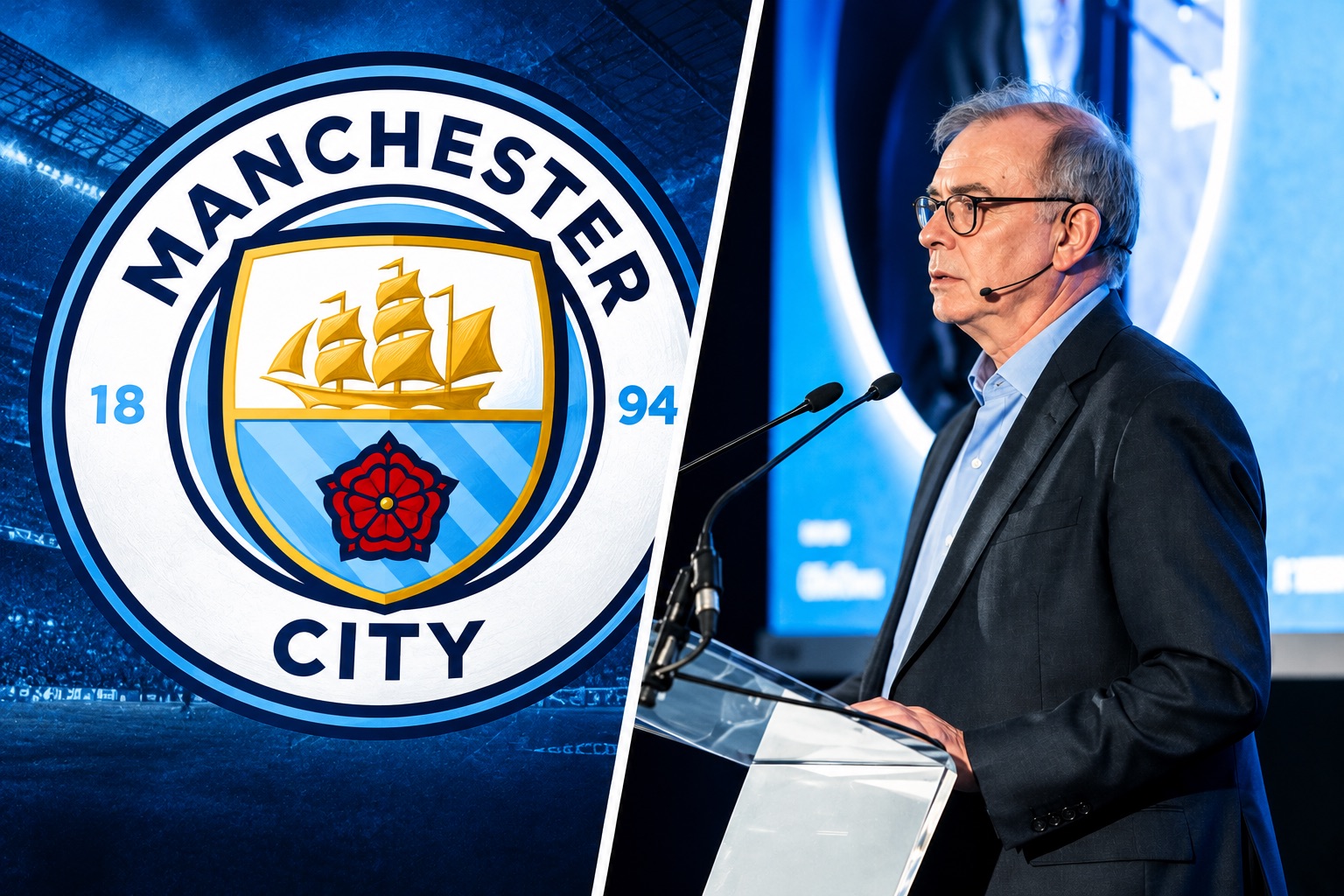
The chairman of England’s Independent Football Regulator (IFR), David Kogan, has issued a firm warning that he would resign from his position if political interference were allowed to influence the regulator’s handling of the Manchester City case.
Kogan’s comments come at a particularly sensitive moment for English football, with Manchester City appealing against an independent commission’s findings that the club committed widespread breaches of the Premier League’s financial regulations.
The regulator’s position has attracted increased attention because of Manchester City’s ownership links to the United Arab Emirates and the wider economic and diplomatic relationship between the UK and the Gulf state. Kogan, however, has insisted that those considerations cannot be allowed to influence decisions made by the football regulator.
Speaking during the launch of the IFR’s latest State of the Game report in Manchester, Kogan stressed that independence was central to the organisation’s role.
He said that any form of political interference in the regulator’s work would lead to his resignation, adding that he had made the same position clear previously and continued to stand by it.
Kogan also said that the regulator had not experienced political pressure over Manchester City or any other matter and that he did not expect such pressure to emerge in the future.
The warning follows comments from Prime Minister Andy Burnham, who said he would be “really concerned” if Manchester City’s current Abu Dhabi ownership were to leave the club as a consequence of the financial case.
Burnham’s comments have prompted questions about the potential relationship between football regulation, government interests and the significant investment associated with Manchester City’s ownership.
Manchester City has been owned by Sheikh Mansour bin Zayed Al Nahyan since 2008. The Abu Dhabi-backed ownership has transformed the club into one of the most successful sides in English football, while also contributing to a major expansion of its commercial operation and global profile.
The club’s ownership has also become part of the broader debate surrounding foreign investment in English football, particularly when sporting decisions could have implications beyond the game.
Kogan made clear, however, that the IFR’s responsibility is to football rather than political or diplomatic considerations.
The Manchester City case began after the Premier League brought a large number of financial-rule charges against the club. An independent commission subsequently found City guilty of serious breaches covering a nine-season period.
According to reports, the findings relate to alleged attempts to circumvent financial regulations, including issues surrounding the reporting of revenue and commercial arrangements. The commission concluded that the club had deliberately sought to bypass Premier League financial rules.
Manchester City has rejected the allegations and appealed against the findings. The club has maintained its innocence throughout the process, meaning the case has not yet reached its final stage.
The appeal is therefore crucial because the eventual outcome could determine whether further action is required by football authorities.
The Independent Football Regulator could become involved in matters concerning Manchester City’s ownership if the findings are upheld and questions arise over whether those controlling the club continue to meet the required suitability standards.
The IFR has significant powers under England’s new football regulatory framework. In extreme circumstances, it can prevent unsuitable owners from controlling clubs and has powers that could ultimately result in an owner being required to sell.
That possibility has increased the importance of Kogan’s insistence that decisions must be made independently.
The regulator’s role is not to determine the sporting punishment for every breach of Premier League rules. However, its responsibilities include assessing whether club owners and senior officials meet the standards required to operate within the English football system.
If Manchester City’s appeal fails, the findings could therefore become an important factor in any future assessment of the club’s ownership.
Kogan indicated that the existing verdict would be considered only after the appeal process had been completed. He explained that an outcome which survives the appeal process would clearly be relevant when the regulator considers licensing and the suitability of owners, directors and senior executives.
That means Manchester City’s immediate priority remains its appeal.
The club faces the possibility of significant consequences if the independent findings are ultimately upheld. Potential Premier League sanctions could include a substantial financial penalty, a points deduction or, in an extreme scenario, removal from the competition.
The precise consequences remain uncertain, and no final punishment should be assumed while the legal process continues.
The situation has nevertheless created one of the most significant governance challenges in recent Premier League history.
Manchester City’s success over the past decade has made the club one of the dominant forces in English football. During the period covered by the allegations, City won multiple Premier League titles and established itself as a major European power.
The case therefore has implications that extend beyond one club.
It raises broader questions about how English football should regulate wealthy ownership groups, how financial rules should be enforced and whether government interests can remain separate from decisions affecting clubs backed by foreign investors.
Those questions have become particularly relevant because the United Arab Emirates is an important economic partner for the United Kingdom.
Any suggestion that diplomatic or commercial considerations could influence football regulation would potentially undermine confidence in the new regulatory system. That is why Kogan’s statement has been viewed as an attempt to draw a clear boundary between government policy and football governance.
The IFR itself was established by the UK government as part of reforms designed to strengthen the financial sustainability and governance of English football.
One of its responsibilities is to help ensure that clubs are properly managed and remain financially sustainable while also protecting their long-term interests.
Kogan’s comments came as the regulator released a report warning about financial weaknesses across English football. The report found that a large majority of clubs in the top five divisions were operating at a loss, highlighting the financial pressures facing the game despite substantial overall revenues.
The findings underline why the regulator believes strong and independent oversight is necessary.
For Manchester City, however, the immediate issue remains the appeal against the financial verdict.
Until that process is completed, the club continues to operate under its existing ownership structure. The regulator is not expected to make a definitive assessment of the owners based solely on the original commission’s findings while the appeal remains unresolved.
The situation could change significantly if the appeal confirms the commission’s conclusions.
If that happens, the IFR would have to consider the implications under its own regulatory responsibilities. Such a process would be expected to examine the circumstances carefully and follow the regulator’s established legal and governance procedures.
Kogan’s intervention has therefore sent a clear message: Manchester City’s ownership will not receive special treatment because of its political or economic connections.
At the same time, the regulator’s chairman has acknowledged that no political pressure has been applied to the organisation so far.
His comments are consequently more of a declaration of principle than an accusation against the government.
For Manchester City supporters, the statement offers another indication of how seriously the authorities are treating the independence of the regulatory process.
The club now awaits the outcome of its appeal, while the football authorities face pressure to ensure that the case is handled according to the rules rather than outside considerations.
Kogan’s position is unequivocal. If political interference enters the process, he says he will leave his position.
For English football, the Manchester City case has become a major test of whether the country’s new regulatory structure can demonstrate that principle in practice.
The eventual outcome could influence not only Manchester City’s future but also how ownership, financial compliance and regulatory independence are viewed across the Premier League and the wider English game.
- Tags
- Manchester City
- David Kogan
- Independent Football Regulator
- Premier League
- Football Regulation
- Abu Dhabi
- Manchester City Charges
Related stories

Coventry City 0-1 Fulham: Oscar Bobb Strikes Late to Secure Hard-Fought Victory
Fulham secured a narrow Premier League victory over Coventry City as Oscar Bobb’s 80th-minute goal settled a closely contested encounter and handed the visitors all three points.
NewsVaultHQ6 min read
Read more
Arsenal 2-0 Everton: Gunners Move Level With Man City at Premier League Top
Arsenal took full advantage of Manchester City’s defeat at Aston Villa as goals from Ezri Konsa and Gabriel Magalhães secured a 2-0 victory over Everton at the Emirates Stadium.
NewsVaultHQ5 min read
Read more
Noni Madueke Strikes Late as Arsenal Beat Nottingham Forest to Return to Second
Noni Madueke came off the bench to score the decisive goal as Arsenal secured a hard-fought 1-0 victory over Nottingham Forest at the City Ground, moving the Gunners back above Brighton into second place.
NewsVaultHQ5 min read
Read more
Manchester United Held by Leeds as Premier League Winless Run Reaches 49 Days
Manchester United were forced to settle for a 1-1 draw against Leeds United at Elland Road as their difficult Premier League run continued, with Bryan Mbeumo’s opener cancelled out by Dominic Calvert-Lewin.
NewsVaultHQ5 min read
Read more