
World
France Reports First Human Shamonda Virus Case as Disease Spreads Across Western Europe
France has confirmed the world’s first documented human infection with Shamonda virus after a severely immunocompromised patient died in early October. The virus, which primarily affects livestock, has now been detected across 14 Western European countries and territories.
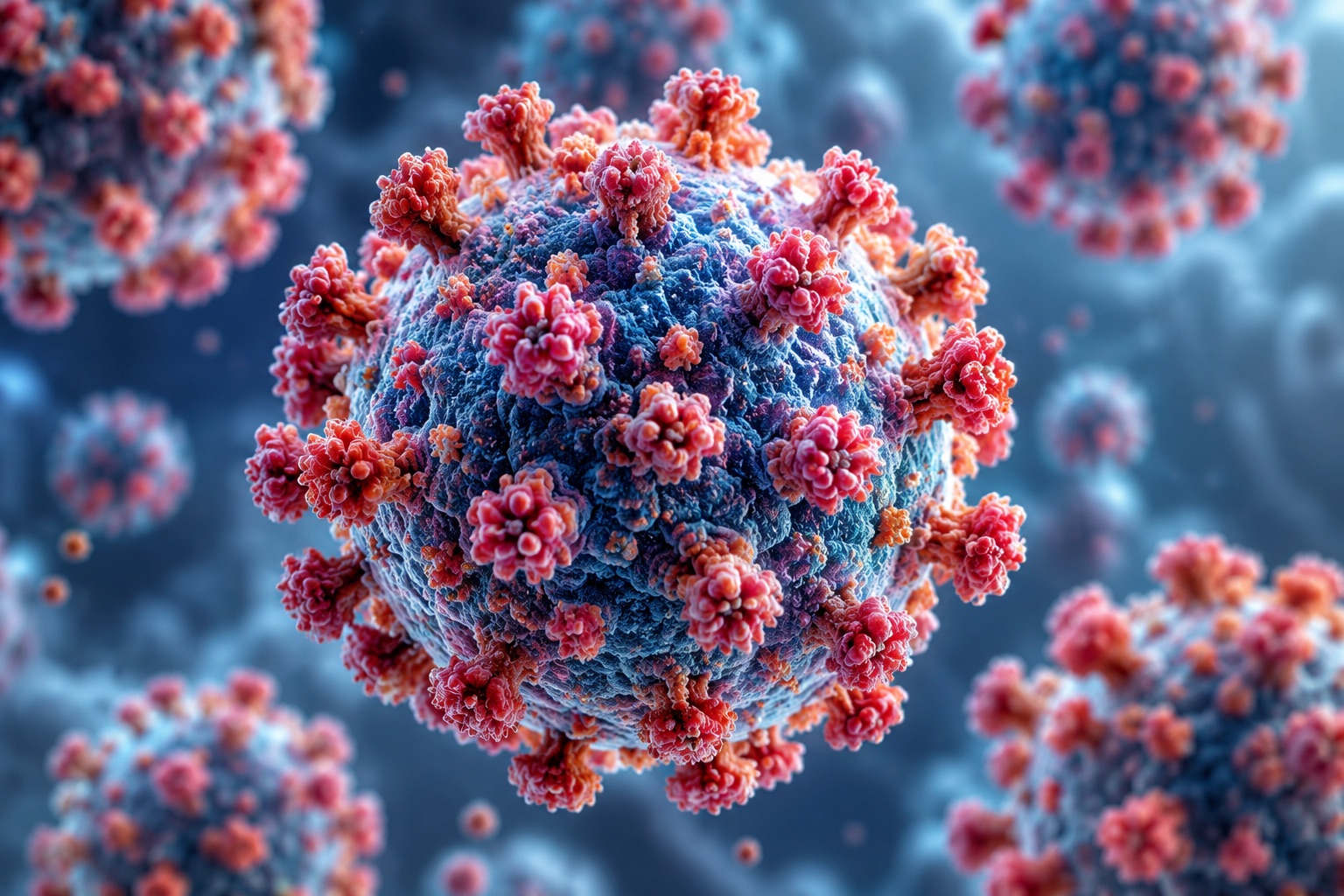
France has reported the first known human infection with Shamonda virus, marking a significant development in the spread of a disease that had previously been considered a virus affecting animals rather than people.
French authorities said the case involved a severely immunocompromised patient who had been receiving treatment for a serious illness at the Hospices Civils de Lyon. The patient died in early October, and investigations are continuing to determine the precise circumstances of the infection and the extent to which Shamonda virus contributed to the person’s death.
The case is the first documented human infection reported anywhere in the world. Until now, Shamonda virus had been associated primarily with livestock, particularly cattle, and had been detected sporadically in parts of Africa and Japan.
French health authorities have stressed that there is currently no identified health risk to the general population based on the information available. They described the infection as an exceptional case involving a patient whose immune system was severely compromised.
However, the development has attracted international attention because the virus has spread rapidly among animals across Western Europe since it was first identified on the continent earlier this year.
How the first human case was detected
The patient was being treated in Lyon for a serious underlying illness and was described by authorities as severely immunodeficient.
According to the French authorities, preliminary investigations indicate that the neurological complications experienced by the patient before death were very likely linked to the Shamonda infection. However, investigations into the clinical details, biological findings and epidemiological circumstances remain underway.
The leading theory is that the patient became infected after being bitten by a Culicoides midge, a small biting insect known to transmit several viruses among animals.
The suspected exposure is believed to have occurred in eastern France, where Shamonda virus had been circulating among animals during the spring and summer.
Authorities have not reported evidence suggesting that the virus spread from the patient to another person.
The European Centre for Disease Prevention and Control (ECDC) is monitoring the situation and has been working with French authorities and European partners to assess what the first human infection could mean for public health.
A virus first identified in Nigeria
Shamonda virus is not new.
The virus was first identified in Nigeria in the mid-1960s and has subsequently been detected sporadically in cattle in parts of West, East and southern Africa, as well as Japan. Its arrival in Europe in 2026 therefore represents a major geographical expansion of the disease.
The virus belongs to the Orthobunyavirus group and is related to other viruses in the Simbu serogroup, including Schmallenberg virus.
For decades, Shamonda was regarded as a virus that did not infect humans. The French case has therefore changed an important part of scientists’ understanding of the pathogen, although there is currently no evidence that it has become capable of spreading efficiently between people.
The virus is mainly associated with cattle, although infections have also been identified in other animals.
Rapid spread among European livestock
The European outbreak was first recognized during the summer of 2026.
Clinical signs were reported in livestock from June, while the virus was identified in late July. Initial detections involved cattle in Switzerland, Germany and France before additional cases appeared elsewhere.
The virus has since been reported in a growing number of European locations.
The ECDC currently lists detections in Austria, Belgium, France, Germany, Ireland, Italy, Liechtenstein, Luxembourg, the Netherlands, Portugal, Spain and Switzerland, as well as Jersey. French animal-health surveillance reporting has described the outbreak as affecting 14 Western European countries and territories.
The spread has raised concerns within the agricultural sector because the disease can affect milk production and cause significant illness in cattle.
In France, infections have been detected in numerous departments. Reports from affected farms have described symptoms including fever, diarrhoea, lethargy and substantial reductions in milk production.
A study involving French dairy farms found that milk output in affected herds could fall dramatically, with losses of up to 75% reported in some cases.
How Shamonda virus spreads
Shamonda virus is primarily transmitted by biting midges belonging to the Culicoides genus.
These tiny insects can acquire viruses when feeding on infected animals and subsequently transmit them to other susceptible animals through later bites.
This method of transmission is particularly important during warmer months because midge populations and activity are influenced by temperature, rainfall and other environmental conditions.
The ECDC said biting midges are generally most active from spring through autumn, although activity differs depending on the species, location and weather conditions. With temperatures now falling across much of Europe, the activity of many midge species is expected to decline.
The precise Culicoides species responsible for transmission in the French human case has not yet been established.
Researchers are also studying how the virus entered Europe and how quickly different strains have moved between countries.
Animals remain the main concern
Although the discovery of the first human case has generated concern, the immediate impact of Shamonda virus remains primarily an animal-health issue.
Cattle appear to be the main hosts affected by the virus. Sick animals can develop fever, diarrhoea, weakness and reduced milk production.
The virus can also create reproductive problems in livestock. Infections during pregnancy may result in abortions, stillbirths or fetal abnormalities, according to veterinary authorities studying the European outbreak.
Other species have also tested positive.
European investigations have identified the virus in horses, sheep and goats, while authorities have also reported infections involving other animals in some locations. Horses have attracted particular attention after neurological disease was observed in some infected animals.
Scientists are continuing to determine the full range of animals that can become infected and the severity of disease in each species.
Two European variants identified
The European outbreak has also revealed that Shamonda virus is genetically more complicated than initially understood.
Researchers have identified two genetically distinct European variants, known as SHAV-EU1 and SHAV-EU2.
The Friedrich Loeffler Institute in Germany reported that the two variants appear to have emerged through separate introduction events. SHAV-EU1 has been associated with southern Germany, Switzerland and France, while SHAV-EU2 has been identified in northern Germany and the Netherlands, with later detections in other areas.
Scientists are studying whether the two variants behave differently and whether infection with one provides protection against the other.
The emergence of multiple variants is another reason European veterinary and public health agencies are maintaining surveillance.
Why authorities are not declaring a public health emergency
Despite the significance of the French case, officials have not indicated that Shamonda virus is currently spreading among humans.
French authorities have repeatedly stated that no health risk to the general population has been identified at this stage.
The ECDC has similarly described the patient as someone whose underlying illness and severe immunosuppression made them more vulnerable to infection and complications than the general population.
That distinction is important.
The discovery of a virus in a human does not automatically mean the pathogen can spread efficiently from person to person. At present, there is no evidence of sustained human-to-human transmission of Shamonda virus.
The suspected route in this case is instead a bite from an infected midge.
Nevertheless, the case demonstrates that the previous assumption that Shamonda could not infect humans may need to be reconsidered.
International agencies are investigating
French authorities have notified international health organizations, including the World Health Organization and the ECDC.
European institutions are also coordinating with animal-health agencies and laboratories to improve testing and identify potential additional infections.
The ECDC said it is working with the relevant EU reference laboratory to strengthen diagnostic capacity and provide support to member states investigating suspected cases.
The European Food Safety Authority is also involved because of the virus’s impact on livestock and the wider animal-health implications.
At present, there is no commercially available vaccine against Shamonda virus, adding to the importance of surveillance and research.
What happens next?
The French human case is expected to trigger closer investigation into the ability of Shamonda virus to infect people.
Scientists will need to establish whether the infection was an extremely rare event linked to the patient’s severe immunosuppression or whether humans could become infected more commonly than previously recognized.
Authorities will also continue monitoring livestock populations, particularly cattle, while tracking the movement of infected midges and the two European virus variants.
For now, health officials are urging caution without suggesting that the public should panic.
The French case is exceptional, and there is currently no identified threat to the general population. But after decades of Shamonda virus being regarded primarily as an animal disease, its confirmed appearance in a human has opened a new chapter in the investigation of the pathogen.
With the virus already established across much of Western Europe, researchers will be watching closely through the coming months to determine whether the human infection remains an isolated event or signals a broader change in the behaviour of Shamonda virus.
For European farmers and veterinary authorities, however, the challenge is already clear: controlling a rapidly emerging livestock disease while scientists work to understand a virus that has now crossed a boundary once thought unlikely — from animals into humans.
Related stories

FG Tightens Ebola Screening as Nigeria Moves to Seal Entry-Point Gaps
The Federal Government has ordered stricter enforcement of Ebola screening and health protocols at Nigeria’s designated points of entry following concerns over breaches of existing measures.
NewsVaultHQ5 min read
Read more
APC Fires Back at Atiku Over ₦10bn Ebola Fund, Says Money Remains Untouched
The APC Presidential Campaign Council has rejected Atiku Abubakar’s criticism of the Federal Government’s handling of Nigeria’s latest Ebola case, insisting that the ₦10 billion approved by President Bola Tinubu for emergency preparedness in June remains untouched.
NewsVaultHQ5 min read
Read more
Senate Demands Probe Into Benue Killings As Death Toll Hits 113
The Nigerian Senate has directed the Inspector-General of Police, Tunji Disu, to investigate the reported killing of 113 people in four separate attacks across communities in Benue State and ensure those responsible are brought to justice.
NewsVaultHQ5 min read
Read morePutin Meets Trump Envoy Witkoff as Russia Signals Readiness to Resume Ukraine Peace Talks
Russian President Vladimir Putin has met U.S. special envoy Steve Witkoff in St. Petersburg as Washington steps up diplomatic efforts to end the war in Ukraine, with Moscow now signaling that it is prepared in principle to resume trilateral negotiations with the United States and Ukraine in November.
NewsVaultHQ8 min read
Read more