
BreakingWorld
Hackers Target Italy’s Foreign Minister Antonio Tajani, Leak Personal Information on Dark Web
Italian Foreign Minister Antonio Tajani has revealed that cybercriminals have published his personal information on the dark web and are attempting to obtain additional details about him and his family. Prime Minister Giorgia Meloni has condemned the incident, with Italy linking the suspected attack to its continued support for Ukraine.
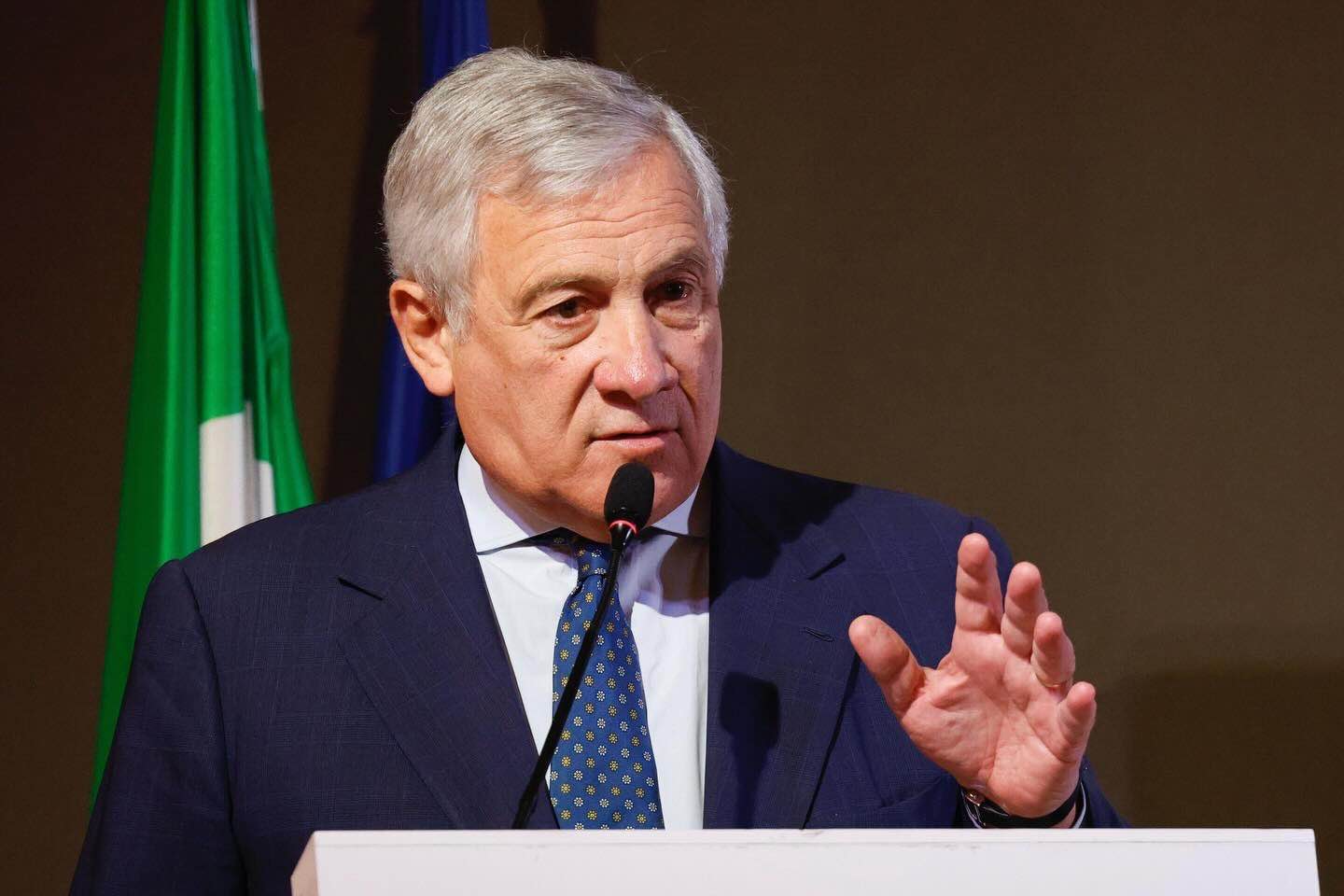
Hackers Target Italian Foreign Minister Antonio Tajani
Italy’s Foreign Minister and Deputy Prime Minister, Antonio Tajani, has revealed that he has become the target of a cyberattack after criminals allegedly published his personal information on the dark web, raising fresh concerns about the safety of government officials and the growing threat of politically motivated cybercrime.
Tajani made the revelation on Saturday, November 7, 2026, through a statement on social media, explaining that his personal details had been circulating on the dark web for several days. He also warned that those behind the operation were actively seeking additional information about him and members of his family.
The Italian minister described the development as an attempt to intimidate him and create new security threats for his loved ones. According to his statement, the individuals involved were reportedly willing to pay for further information about his private life.
The incident has attracted attention across Italy, particularly because Tajani believes the attack is connected to the country’s political position on Russia’s invasion of Ukraine. His comments have also prompted a strong response from Prime Minister Giorgia Meloni, who expressed solidarity with the foreign minister and condemned attempts to expose confidential information belonging to public officials.
Tajani Links Cyberattack to Italy’s Support for Ukraine
In his statement, Tajani suggested that Italy’s continued support for Ukraine may have made him a target of hostile cybercriminals.
The Italian government has maintained its backing of Kyiv since Russia launched its full-scale invasion in February 2022, providing both humanitarian and military assistance as Ukraine continues to defend its territory.
Tajani argued that his country’s position in support of Ukrainian sovereignty and independence was the political motivation behind the incident.
He indicated that defending the freedom of an independent country and supporting its democratic rights had apparently become a reason for criminal organisations to target him.
The foreign minister also suggested that the cyberthreats could be connected to efforts by his ministry to improve its digital security systems. He maintained that the government would not abandon its responsibilities because of intimidation or attempts to compromise the safety of its officials.
Although Tajani pointed towards pro-Russian motives, the precise identities of those responsible have not been independently established. Italian authorities are expected to continue examining the incident and the information circulating online.
The minister did not disclose the specific personal information that had been published, leaving questions about the extent of the exposure and whether any particularly sensitive details had been compromised.
Nevertheless, the reported willingness of the attackers to purchase additional information about Tajani and his family has added another dimension to the investigation.
Giorgia Meloni Condemns Attack and Supports Tajani
Italian Prime Minister Giorgia Meloni has publicly expressed her support for Tajani following the disclosure.
Meloni described the publication and attempted sale of confidential information belonging to government officials as a serious matter that requires a determined response.
Her reaction highlighted the government’s concerns about the use of cybercrime as a tool for intimidation, particularly when political disagreements extend beyond traditional diplomatic channels.
The prime minister also expressed solidarity with Tajani following reports of activities involving pro-Russian hackers and the circulation of personal information on the dark web.
The response from Meloni demonstrates that the incident is being treated as more than an ordinary online security breach. The involvement of a senior government official and the reported targeting of his relatives have raised broader questions about the protection of individuals holding sensitive public positions.
Tajani, who serves as both foreign minister and deputy prime minister, is an important figure in Italy’s foreign policy establishment. Any attempt to compromise his personal security could therefore have implications beyond his immediate family.
However, there has been no official confirmation that government systems or classified diplomatic information were accessed during the incident.
What Is the Dark Web and Why Is It a Concern?
The dark web is a section of the internet that cannot normally be accessed through conventional search engines and requires specialised software, such as the Tor browser, to reach certain websites and services.
Although it has legitimate privacy-related uses, it has also become a marketplace for illegal activities, including the sale of stolen personal information, compromised accounts and confidential material.
Cybercriminals frequently use these platforms to exchange information obtained through hacking, phishing campaigns, data breaches and other unlawful activities.
Personal information published in these environments can create serious risks for its victims. Depending on the nature of the exposed material, criminals may use it to conduct identity theft, impersonation, financial fraud, harassment or targeted intimidation.
For public officials, the consequences can be particularly concerning because their positions may make them attractive targets for politically motivated groups.
In Tajani’s case, the reported publication of his personal details and attempts to obtain additional information about his relatives have raised concerns about the potential misuse of private information.
The incident also illustrates how digital attacks can extend beyond government institutions and directly affect the individuals responsible for making political and diplomatic decisions.
A Wider Pattern of Cybersecurity Concerns in Italy
The latest development comes amid a series of cybersecurity incidents and security concerns affecting Italy and other parts of Europe.
In October 2026, Italy’s Foreign Ministry confirmed that its official website had been targeted by a cyberattack. The incident was reportedly a distributed denial-of-service attack, commonly known as a DDoS attack.
Such attacks involve overwhelming a website or online service with large volumes of artificial requests, making it difficult for legitimate users to access the platform.
The ministry said its security systems had effectively mitigated the October attack without causing disruption to its services. It also confirmed that the situation was being monitored in cooperation with relevant national authorities.
The pro-Russian hacker group NoName057(16) claimed responsibility for that particular website attack, according to Italian media reports.
Authorities also examined diplomatic and consular websites abroad to determine whether similar attempts had been made against other Italian institutions.
However, the October incident and the latest disclosure involving Tajani are separate developments. There has been no confirmed evidence establishing that the same individuals or organisation were responsible for both operations.
The distinction is important because cyberattacks can involve different actors, methods and objectives, even when they appear to share political motivations.
Another recent incident involved the company behind the Brenner Base Tunnel, a major railway infrastructure project connecting Austria and Italy. The company confirmed that it had experienced a cyberattack on October 17 and had activated its security procedures to isolate affected systems.
These developments have increased attention on the vulnerability of critical infrastructure, government institutions and individuals to increasingly sophisticated digital threats.
Tajani Vows Not to Be Intimidated
Despite the reported threats, Tajani has made it clear that the incident will not prevent him from carrying out his responsibilities.
The foreign minister maintained that he would continue working to protect Italy and strengthen the security of his ministry.
He also emphasised the importance of cooperation with other countries in responding to cyber threats, suggesting that international collaboration would remain an important part of Italy’s strategy.
His position reflects the wider challenge facing European governments as they attempt to protect public institutions from digital attacks while maintaining their political and diplomatic commitments.
The incident has also renewed discussions about the need for stronger cybersecurity measures for senior government officials and their families.
Protecting official websites and government databases is only one aspect of digital security. Personal accounts, private communications and information belonging to relatives can also become potential targets.
For this reason, governments increasingly need to consider the security of individuals alongside the protection of their institutional networks.
What Happens Next?
The full extent of the information exposed in the attack remains unclear, and the identities of those responsible have not been conclusively established.
Italian authorities will need to determine how the information was obtained, whether additional personal details remain at risk and whether the attackers have access to other sensitive material.
The government may also face pressure to strengthen protective measures around senior officials as investigations continue.
For now, Tajani has maintained that he will not be intimidated, while Meloni’s response has made clear that the government considers the incident a serious security concern.
The episode highlights how political tensions surrounding the war in Ukraine continue to create challenges beyond the battlefield, with cybersecurity emerging as another important front in the wider conflict.
As European countries face growing digital threats, Italy’s response to the incident could become another test of how effectively governments can protect their officials, institutions and citizens against politically motivated cybercrime.
Related stories
US offers $20 million reward for information on Iran’s nuclear programme
The United States has announced a reward of up to $20 million for credible information about Iran’s nuclear programme, including its facilities, equipment, scientists and other personnel. The offer also includes possible relocation for individuals who provide valuable intelligence.
NewsVaultHQ8 min read
Read more
Buhari Promised Me APC Presidential Ticket in 2022 – Amaechi
Former Rivers State Governor Rotimi Amaechi has revealed that late President Muhammadu Buhari assured him of the APC presidential ticket ahead of the 2022 primary, claiming that he relied on the promise and consequently missed opportunities to build political alliances that could have helped him defeat Bola Tinubu.
NewsVaultHQ6 min read
Read more
Soludo Targets 50% of Anambra Votes for Tinubu in 2027
Anambra State Governor, Chukwuma Soludo, has pledged to secure at least 50 per cent of the state’s votes for President Bola Tinubu in the 2027 presidential election, announcing that APGA will adopt the incumbent as its preferred candidate instead of fielding its own presidential flagbearer.
NewsVaultHQ5 min read
Read more
Bomb Threats Disrupt Flights Across Europe as Multiple Airlines Face Security Alerts
Several European flights have been targeted by bomb threats, forcing aircraft diversions, emergency security inspections and temporary airport closures. Ryanair, Wizz Air, LOT Polish Airlines and Scandinavian Airlines were among the carriers affected, although authorities have so far found no explosives.
NewsVaultHQ7 min read
Read more