FIFA World Cup
Netflix Lands Exclusive Rights to Broadcast 2030 World Cup in Spain and Andorra.
Netflix has secured exclusive broadcast rights to the 2030 FIFA World Cup in Spain and Andorra, giving the streaming giant access to all 104 matches of the historic centenary tournament.

Netflix is set to take a major step deeper into live football broadcasting after securing the exclusive rights to show the 2030 FIFA World Cup in Spain and Andorra.
The agreement means viewers in the two territories will be able to watch all 104 matches of the tournament live on Netflix when the competition gets underway in 2030. The deal represents a significant change in the way the World Cup will be distributed in Spain, where major international football tournaments have traditionally been associated with conventional television broadcasters.
Netflix confirmed the agreement on October 13, describing the 2030 tournament as a special edition because it will mark 100 years since the first FIFA World Cup was held in Uruguay in 1930.
The streaming platform’s agreement covers the entire tournament rather than a limited selection of matches. This will allow subscribers in Spain and Andorra to follow the competition from its opening game through to the final.
For Netflix, the deal represents its first major men’s international football tournament broadcast in Spain. The company has been steadily increasing its presence in live sports, moving beyond its traditional identity as a platform primarily focused on films, television series and documentaries.
Its sports portfolio has expanded to include events involving the NFL, MLB, WWE, boxing and mixed martial arts. The company also holds the rights to the 2027 and 2031 FIFA Women’s World Cups in the United States and Canada.
All 104 matches to be available live
One of the biggest features of the agreement is the scope of Netflix’s coverage.
The company will stream all 104 matches of the 2030 World Cup live for audiences in Spain and Andorra. That includes the group-stage fixtures, knockout matches, semi-finals and final.
Netflix also plans to build a wider football presentation around the matches. Its coverage is expected to include programmes before games, halftime analysis and post-match shows designed specifically for Spanish audiences.
The platform will also produce a daily roundup programme on match days, giving viewers another way to follow developments across the tournament.
Netflix said its coverage will have a distinctly Spanish perspective, which could allow the company to combine traditional match coverage with the type of documentary and entertainment programming for which it is already known.
The approach is expected to give the platform an opportunity to turn the World Cup into a broader streaming experience rather than simply offering live matches.
Some matches will remain available on free-to-air television
Despite Netflix securing the exclusive rights, viewers in Spain will not necessarily need a Netflix subscription to watch every important moment involving the Spanish national team.
As part of the agreement, one match from each matchday will be available for free in Spain.
In addition, Netflix will make a package of selected matches available to a national free-to-air television broadcaster. The package will include every match played by Spain, both semi-finals and the final.
The identity of the television broadcaster has not yet been announced.
The arrangement is designed to ensure that major games remain widely accessible to the public, particularly matches involving the host nation’s national team and the decisive stages of the competition.
That element of the agreement is particularly important because the World Cup remains one of the biggest sporting events on the Spanish television calendar.
Spain will enter the 2030 competition as the reigning world champion following its victory at the 2026 tournament. The country will also have the distinction of hosting the competition alongside Portugal and Morocco.
Spain preparing to host another historic World Cup
The 2030 World Cup will be unlike previous editions because it will be spread across several countries and continents.
Spain, Portugal and Morocco are the main hosts of the tournament, while Argentina, Paraguay and Uruguay will stage special centenary matches.
The decision to include South American fixtures is linked to the history of the competition. Uruguay hosted and won the inaugural World Cup in 1930, while Argentina was the runner-up.
The centenary celebrations will therefore connect the first tournament with the 2030 edition, giving the competition an additional historical significance.
The main tournament will then continue in Spain, Portugal and Morocco, bringing the world’s leading national teams together for the expanded competition.
For Spain, hosting the World Cup as reigning champions could create enormous domestic interest. The country will have the opportunity to defend its title on home soil while welcoming supporters and teams from around the world.
Netflix’s acquisition places the streaming service at the centre of that football spectacle.
A significant move into Spanish sports broadcasting
The agreement is also notable because it demonstrates how streaming platforms are increasingly competing with traditional television networks for major sports rights.
For decades, football broadcasting has been dominated by television companies that negotiated directly for rights to major competitions. Streaming services have gradually changed that landscape by investing heavily in live sporting events.
Netflix has traditionally been more cautious than some of its competitors when it comes to sports rights, but its strategy has expanded considerably in recent years.
The company has increasingly used live sporting events to attract viewers, generate conversation and strengthen its relationship with major sports organisations.
Securing the 2030 World Cup rights in Spain and Andorra is therefore a considerably larger move than acquiring an individual sporting event.
The World Cup is among the most watched sporting competitions on the planet, and controlling the rights to all 104 matches gives Netflix a major position in one of Europe’s most football-focused markets.
Financial details remain undisclosed
Neither Netflix nor FIFA has disclosed how much was paid for the Spanish and Andorran rights.
That means the financial value of the agreement remains unknown.
The lack of a publicly announced figure makes it difficult to compare the deal directly with previous World Cup broadcasting agreements in Spain. However, the scale of the package indicates the importance of the rights, given that Netflix will have access to every match rather than only selected fixtures.
The agreement also reflects the growing value of major sports content to streaming companies.
For Netflix, securing premium football rights could help strengthen subscriber engagement around one of the world’s biggest sporting occasions.
The company has not indicated whether the World Cup rights will result in a separate sports package or whether the matches will simply form part of its existing service.
Netflix and FIFA expanding their relationship
The 2030 men’s World Cup agreement is not Netflix’s first major deal with FIFA.
The streaming platform already holds rights to the 2027 and 2031 FIFA Women’s World Cups in the United States and Canada.
The two organisations are therefore building an increasingly significant relationship, with the latest agreement extending that partnership into men’s international football in Spain and Andorra.
FIFA Secretary General Mattias Grafström welcomed the deal, saying the organisation was pleased to continue strengthening its relationship with Netflix ahead of the 2030 tournament.
Netflix Chief Content Officer Bela Bajaria also highlighted the importance of Spain’s involvement in the competition.
She pointed to the excitement surrounding Spain hosting the tournament as reigning world champions and said the company was looking forward to bringing every match to supporters in Spain and Andorra.
What the deal means for fans
For football supporters in Spain and Andorra, the biggest change will be the platform through which the majority of the World Cup can be watched.
Instead of relying primarily on conventional television coverage, fans will have access to the complete tournament through Netflix.
The inclusion of free-to-air coverage for Spain’s matches, the semi-finals and final should also ensure that some of the competition’s most important games remain accessible to viewers without a Netflix subscription.
The exact television partner has yet to be revealed, and further details about the arrangement are expected closer to the tournament.
Netflix’s coverage will also extend beyond the matches themselves, with pre-match, halftime and post-match programming planned alongside daily tournament roundups.
That could make the 2030 World Cup one of the company’s most ambitious live sports projects to date.
With Spain, Portugal and Morocco preparing to host the centenary edition of the tournament, Netflix will now have a central role in bringing the event to viewers across Spain and Andorra.
The agreement marks another major development in the continuing shift from traditional television broadcasting toward streaming, while giving Netflix a prominent position in one of football’s most important markets.
As preparations for the 2030 World Cup continue, attention will now turn to the tournament’s final arrangements, the host cities and the identity of the Spanish free-to-air broadcaster that will carry the selected matches.
For Netflix, however, the message is already clear: when the world’s biggest football tournament arrives in Spain in 2030, the streaming giant will be ready to deliver all 104 matches to its audience.
Related stories
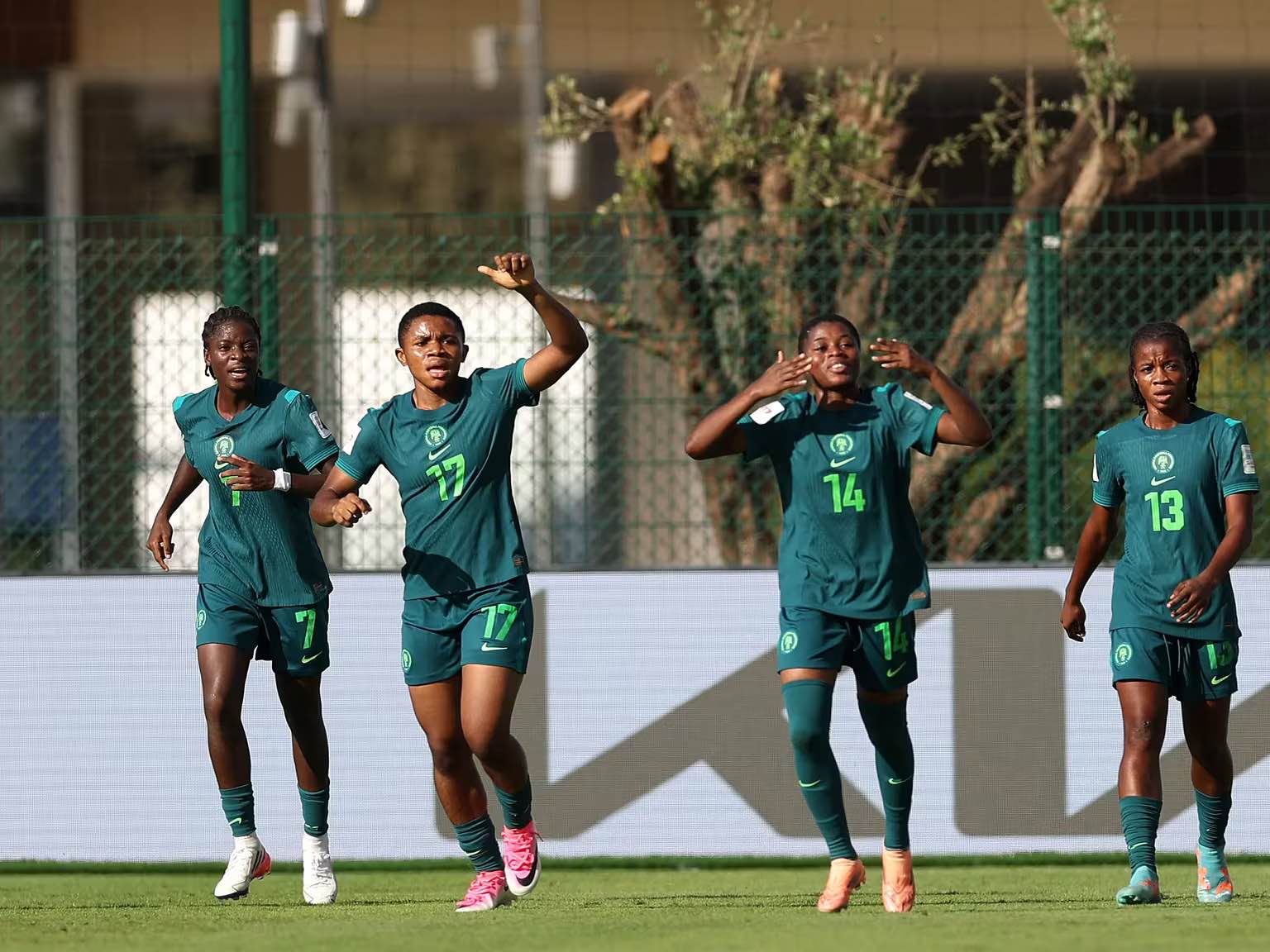
Flamingos Stun Defending Champions North Korea to Seal U-17 World Cup Knockout Spot
Nigeria’s Flamingos produced one of their finest performances of the tournament, defeating defending champions Korea DPR 3-1 to qualify for the Round of 16 at the FIFA U-17 Women’s World Cup in Morocco.
NewsVaultHQ5 min read
Read moreFIFA Names United States Host for Historic 2028 Women’s Club World Cup
FIFA has officially selected the United States to host the inaugural Women’s Club World Cup in January 2028, with 19 clubs from all six football confederations set to compete for the historic title.
NewsVaultHQ6 min read
Read more
FIFA U-17 Women’s World Cup: Nigeria Flamingos Beaten by Poland.
Nigeria’s Flamingos suffered a 2-1 defeat to Poland in their opening Group B match at the FIFA U-17 Women’s World Cup in Rabat, despite a late fightback that gave them hope of rescuing a point.
NewsVaultHQ5 min read
Read more
FIFA Set to Inject Extra £2.6bn Into Global Football Development
FIFA is preparing a major funding boost for the 2027–2030 cycle, with an additional £2.6bn expected to support football development, infrastructure, youth programmes and women’s football worldwide.
NewsVaultHQ5 min read
Read more