
World
Saudi Man Charged Over Alleged Recording Device at OpenAI Office
A Saudi national and former OpenAI engineer has been charged in the United States after authorities accused him of secretly installing a recording device inside an executive conference room at the company’s San Francisco office.
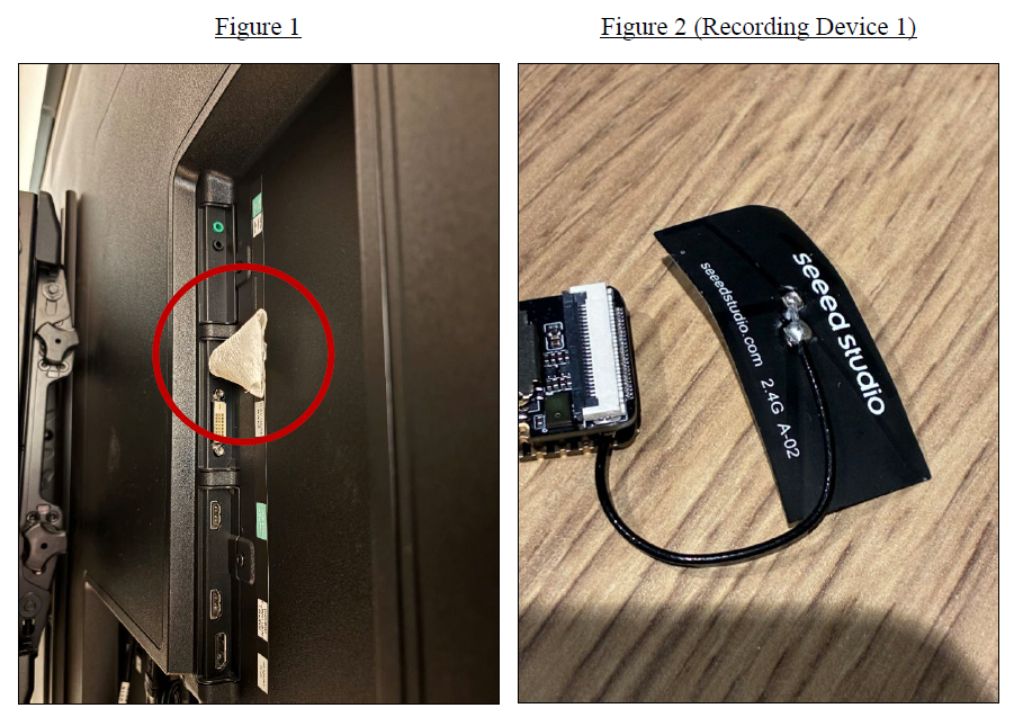
A Saudi national and former OpenAI engineer has been arrested and charged in the United States after authorities accused him of secretly installing a recording device inside an executive conference room at the artificial intelligence company’s San Francisco offices.
The man, identified by U.S. authorities as 35-year-old Abdulrahman Alfozan, was arrested on October 9 and made his initial appearance in federal court on October 13. He has been charged with using or attempting to use an electronic, mechanical or other device to intercept oral communications.
According to the U.S. Department of Justice, Alfozan allegedly placed a covert recording device inside a conference room used by OpenAI executives for meetings involving sensitive company information. The investigation remains ongoing, and the allegations against him have not been proven in court.
Device discovered during security sweep
The investigation began after OpenAI personnel discovered what authorities described as a sophisticated audio recording device on September 30.
According to the criminal complaint, the device had been inserted into a USB port on the back of a television inside an executive conference room. It was allegedly concealed using toilet paper, making it less noticeable to people entering the room.
Authorities believe the device had been installed around September 28, approximately two days before it was discovered.
The conference room was not an ordinary meeting space. According to the Justice Department, access was generally restricted to executives and executive assistants, and the room was used for internal leadership meetings, technical and product discussions and meetings involving external partners and government officials.
Those meetings could involve highly confidential information concerning OpenAI’s research, product plans, business strategy, government relationships and commercial activities.
The discovery prompted OpenAI to report the matter to the Federal Bureau of Investigation. The company subsequently terminated the employee authorities identified as the person allegedly responsible for placing the device.
OpenAI has said there is currently no indication that the employee improperly accessed or removed model weights, source code or customer data.
Authorities allege employee was seen near room
The criminal complaint includes surveillance footage and other evidence that prosecutors say connects Alfozan to the recording device.
According to investigators, CCTV footage from inside the OpenAI office showed Alfozan near the executive conference room on several occasions before the device was discovered.
Authorities also allege that he did not have authorization to access the room or participate in the meetings normally held there.
The complaint further states that on October 5, several days after the original device had been discovered, Alfozan entered the conference room and appeared to look behind the television where the recording device had allegedly been installed.
The incident reportedly attracted additional attention when OpenAI security personnel found another recording device in a bag that had been left unattended inside another part of the building.
The bag allegedly contained Alfozan’s identification and another device similar to the one discovered behind the television.
The discovery of the second device became another significant part of the investigation as authorities attempted to determine why the equipment had been obtained and whether it was connected to the device found in the conference room.
Alleged use of AI tools
One of the more unusual aspects of the case involves the alleged use of AI tools in preparing the recording equipment.
According to the Justice Department, investigators found evidence that Alfozan had made inquiries about OpenAI’s buildings, meeting rooms, room capacities, calendars and the locations of company leadership before the device was allegedly installed.
The complaint also refers to a chatbot account associated with Alfozan’s spouse.
Authorities allege that the account submitted a series of prompts between September 24 and September 30 relating to the construction, customization, installation, testing and remote access of an audio recording device.
Some of the alleged prompts concerned creating a continuous audio recorder, establishing Wi-Fi connectivity, improving audio and live-listening capabilities and encrypting data stored on an SD card.
Investigators also allegedly found prompts specifically connected to the device eventually discovered at OpenAI, including references to its custom header and unique MAC address.
The allegations highlight an unusual dimension of the case: technology developed to assist people with information and productivity was allegedly used in connection with an attempt to create and operate covert surveillance equipment.
However, the existence of the prompts alone does not establish what information was ultimately recorded or whether the device successfully transmitted any confidential conversations.
OpenAI says no evidence of stolen AI technology
Despite the seriousness of the allegations, OpenAI has said there is no evidence at this stage that the incident resulted in the theft or unauthorized removal of its most sensitive technical information.
The company said it used its own AI models to help understand the sophisticated recording device and trace its origin. According to OpenAI, that investigation helped identify the employee who allegedly planted the equipment.
OpenAI also said there were no indications that the individual improperly accessed or exfiltrated model weights, source code or customer data.
That distinction is significant because of the increasingly competitive nature of the global artificial intelligence industry.
OpenAI is one of several companies developing highly advanced AI systems, and information discussed during executive and technical meetings can involve research, product development, business partnerships and future technology plans.
The alleged incident therefore raises questions about how major technology companies protect sensitive information from insider threats, particularly as employees may have legitimate access to buildings, systems and company resources as part of their jobs.
National security concerns
U.S. officials have framed the investigation as more than a routine workplace security matter.
FBI Director Kash Patel said the allegations involved an attempt to secretly capture sensitive communications concerning OpenAI’s superintelligence technology and emphasized the importance of protecting American technological innovation.
Director of National Intelligence Jay Clayton also described the situation as highlighting the importance of safeguarding advanced AI technology amid the global competition to develop increasingly powerful systems.
The Justice Department said the prosecution forms part of wider U.S. efforts to protect American leadership in advanced artificial intelligence and prevent sensitive technology from being obtained through unlawful means.
The case comes at a time when governments around the world are increasingly treating advanced AI capabilities as matters of economic and national security.
Countries including the United States and Saudi Arabia have also been developing closer relationships around artificial intelligence, investment and advanced computing technology. That broader environment has added sensitivity to allegations involving a foreign national working inside a leading American AI company.
Still, authorities have not publicly established that Alfozan was acting on behalf of the Saudi government or any other foreign organization.
The charges currently concern the alleged interception of oral communications, and any broader motive remains part of the investigation.
Alfozan’s background
According to the Justice Department, Alfozan had been employed by OpenAI as an engineer since July 2025.
Reports indicate that he is a Saudi national and a U.S. permanent resident. Before joining OpenAI, he reportedly had experience working in the technology sector, including at companies such as Meta and Microsoft.
The allegations have resulted in his employment being terminated and the matter being handed over to federal authorities.
At this stage, prosecutors are continuing to investigate the circumstances surrounding the recording equipment, its intended purpose and whether any conversations were actually captured.
What happens next?
Alfozan faces a maximum sentence of five years in federal prison, a fine of up to $250,000 and up to three years of supervised release if he is convicted.
The maximum penalty does not mean that he will receive that sentence. Any eventual punishment would depend on the outcome of the legal proceedings and the circumstances established in court.
The case is expected to receive significant attention because of the company involved and the nature of the alleged surveillance.
OpenAI sits at the center of the rapidly developing AI industry, where confidential information about model development, research and commercial strategy can have enormous value.
For the company, the incident also demonstrates the importance of internal security measures designed to detect insider threats. In this case, OpenAI’s security personnel discovered the recording device and subsequently worked with federal investigators.
For law enforcement, the investigation could provide a closer look at how covert surveillance technology can be assembled and concealed using readily available components and how AI tools may be used in planning such activities.
For now, however, the central allegations remain unproven.
Alfozan has been charged, not convicted, and the investigation is continuing. Authorities will have to establish in court whether he deliberately installed the device, what he intended to record and whether any confidential information was actually captured or transmitted.
The case underscores the growing security challenges facing companies at the forefront of artificial intelligence, where protecting information is becoming increasingly important as governments, businesses and competitors race to develop the next generation of powerful AI systems.
Related stories

FG Tightens Ebola Screening as Nigeria Moves to Seal Entry-Point Gaps
The Federal Government has ordered stricter enforcement of Ebola screening and health protocols at Nigeria’s designated points of entry following concerns over breaches of existing measures.
NewsVaultHQ5 min read
Read more
APC Fires Back at Atiku Over ₦10bn Ebola Fund, Says Money Remains Untouched
The APC Presidential Campaign Council has rejected Atiku Abubakar’s criticism of the Federal Government’s handling of Nigeria’s latest Ebola case, insisting that the ₦10 billion approved by President Bola Tinubu for emergency preparedness in June remains untouched.
NewsVaultHQ5 min read
Read more
Senate Demands Probe Into Benue Killings As Death Toll Hits 113
The Nigerian Senate has directed the Inspector-General of Police, Tunji Disu, to investigate the reported killing of 113 people in four separate attacks across communities in Benue State and ensure those responsible are brought to justice.
NewsVaultHQ5 min read
Read more
France Reports First Human Shamonda Virus Case as Disease Spreads Across Western Europe
France has confirmed the world’s first documented human infection with Shamonda virus after a severely immunocompromised patient died in early October. The virus, which primarily affects livestock, has now been detected across 14 Western European countries and territories.
NewsVaultHQ7 min read
Read more